THE CITY
Seville is the cultural and emotional heart of Andalucía — and one of the most passionate sports cities in all of Europe. It’s home to two fierce La Liga rivals, Sevilla FC and Real Betis, whose “Gran Derbi” is widely considered one of the most intense derbies in world soccer. But Seville is far more than just the game: it’s the birthplace of flamenco, a UNESCO World Heritage treasure of Moorish and Gothic architecture, and a city where tapas isn’t a trend but a way of life. The weather is glorious (averaging over 300 days of sunshine), the people are warm, the food is outstanding, and the cost of living is significantly lower than Spain’s bigger cities.
For sports fans, Seville offers something increasingly rare: authentic, affordable, emotionally intense soccer in a city that hasn’t been overrun by mass tourism. It’s a city where you can watch a La Liga match on Saturday night, see world-class flamenco afterward, explore a Moorish palace on Sunday morning, and spend Sunday afternoon eating tapas in a centuries-old bar — all without breaking the bank.
All about
Seville
Sevilla FC: Ramón Sánchez-Pizjuán Stadium
Sevilla FC is one of the most decorated clubs in European soccer, founded all the way back in 1890. It has a record seven UEFA Europa League / UEFA Cup titles — more than any other club in the history of the competition. They’ve also won six La Liga titles and five Copa del Rey trophies. The club plays at the Ramón Sánchez-Pizjuán Stadium (capacity ~43,000) in the Nervión neighborhood, a venue famous for its intense, close atmosphere, in a central area of Sevilla.
Important note for 2026: Sevilla FC is planning a full reconstruction of the Sánchez-Pizjuán, with demolition and rebuilding expected to begin in June 2027. The 2026–27 season is likely the last at the current stadium before the club temporarily relocates (likely to La Cartuja). For soccer history fans, this may be one of the final opportunities to experience the original Pizjuán before its transformation.
Capacity | ~43,000 |
La Liga Tickets | €30–100; VIP seats start at €180 (dynamic pricing; more affordable than Barcelona/Real Madrid) |
Derby / Big Fixtures | €150–400+ (El Gran Derbi, Real Madrid, Barcelona visits) |
Europa League Legacy | Record 7 titles — European nights here are legendary |
Stadium Tour | €12–15; includes museum with Europa League trophies |
Getting There | Metro: Nervión (Line 1); walking distance from city center |
Timing Tip
If you’re a soccer history buff, try to visit before June 2027. The Sánchez-Pizjuán is a storied, atmospheric ground and the last season before renovations will carry extra emotion. The stadium tour includes the impressive trophy room showcasing those seven Europa League trophies.
Real Betis: La Cartuja (Temporary Home)
Real Betis Balompié, Seville’s other great club, is beloved for a motto that captures the Andalusian spirit: “¡Viva el Betis manque pierda!” (“Long live Betis, even when they lose!”). Winners of the 2005 Copa del Rey and consistent top-half La Liga contenders in recent seasons, Betis have one of the most passionate fan bases in Spain. Their supporters are known for creating an incredible atmosphere, regardless of the result. The club is also a global leader in commitment to sustainability.
For the 2025–26 and 2026–27 seasons, Betis are playing home matches at the Estadio de La Cartuja (capacity ~57,000) while their traditional home, the Estadio Benito Villamarín in Heliópolis, undergoes a €100 million renovation. La Cartuja is the Olympic-style stadium on the Isla de la Cartuja, originally built for the 1999 World Athletics Championships. While it lacks the intimacy of the Villamarín, Béticos have done an impressive job filling it with their trademark green-and-white energy — expect 50,000+ for big games.
Temporary Venue | Estadio de La Cartuja (~57,000 capacity) |
La Liga Tickets | €30–150+ (larger capacity = more availability than usual) |
Derby / Big Fixtures | €120–400+ |
Stadium Tour | €8–12 at La Cartuja (Gate 2); book via official Betis website |
Getting There | Shuttle buses from city center; 45-min walk from Torre Sevilla area |
Fan Culture | One of Spain’s most passionate, joyful fan bases |
Silver Lining of the Move Because La Cartuja has ~15,000 more seats than the Villamarín, tickets for most Betis matches are actually easier to get and often cheaper than in previous seasons. If you’ve ever wanted to see Betis live, now is a great time. |
El Gran Derbi: Sevilla vs. Real Betis
The Seville derby — El Gran Derbi — is one of the most emotionally charged fixtures in world soccer. This is not just a game; it’s a city divided (sometimes literally within families). Sevilla fans wear red and white; Béticos wear green and white. The intensity is volcanic, the atmosphere is deafening, and the passion goes well beyond 90 minutes. If you can time your trip around a derby, do it. You will remember it for the rest of your life.
The derby takes place twice per season in La Liga, with additional meetings possible in the Copa del Rey. In 2025–26, Betis host the derby at La Cartuja while Sevilla host at the Pizjuán. Tickets for both are extremely difficult to obtain and prices on the secondary market are steep.
Derby Weekend
Even if you can’t get into the stadium, experiencing the derby atmosphere in the city is electric. The bars of Triana (traditionally Bético territory) and Nervión (Sevillista heartland) are packed with fans watching on screens. Pick your side and join in.
Flamenco: Seville Is Ground Zero
Seville is the undisputed capital of flamenco — the art form was born in the Andalusian communities of Seville, Cádiz, and Jerez. Watching flamenco in Seville isn’t a tourist add-on; it’s essential cultural immersion. The raw emotion, the rhythmic footwork (zapateado), the wailing cante (song), and the passionate guitar — experienced in an intimate tablao (flamenco venue) — is one of the most powerful live performances you’ll ever witness.
Casa de la Memoria | Intimate venue in a historic courtyard in Santa Cruz. ~€22. Book ahead; sells out. |
Tablao El Arenal | One of the world’s most famous tablaos. Show + drink from ~€42; dinner packages available. |
Teatro Flamenco Triana | In the heart of Triana, the traditional flamenco neighborhood. Modern venue, top performers. |
Baraka Triana | Riverside venue in Triana. More casual, authentic neighborhood feel. |
La Casa del Flamenco | Another excellent option in the Santa Cruz quarter. Small, powerful shows. |
For a deeper experience, explore the Triana neighborhood on the west bank of the Guadalquivir — this is the historic home of Seville’s flamenco and Roma communities. The streets, the ceramic workshops, and the bars here are where flamenco lives and breathes. A guided flamenco and tapas tour combining both is a fantastic evening option.
Eating & Drinking: Tapas Capital of Spain
Seville has a legitimate claim to being the tapas capital of Spain. Many bars still serve a free tapa with every drink — a tradition that has largely disappeared in Barcelona and Madrid. The culture of “ir de tapeo” (going from bar to bar) is deeply embedded in daily life, and you’ll find Sevillanos doing it at all hours. The food is Andalucian: bright, fresh, olive oil-drenched, and intensely flavorful. Some restaurants we recommend are Alfarería 21, El Rinconcillo, Las Columnas, Perro Viejo, Sobretablas for an upscale meal, Canabota, Bodeguita Romero and Palo Cortao.
Key Tapas Neighborhoods
Triana | Across the river. Traditional, local, and the spiritual home of Seville’s food and flamenco culture. Try Casa Anselma and Bar Las Golondrinas. |
Santa Cruz | The old Jewish quarter. Atmospheric and touristy, but still has excellent spots. Bodega Santa Cruz (“Las Columnas”) is always packed. |
Alameda de Hércules | Seville’s hip, bohemian square. Great for craft cocktails and modern tapas. |
Feria / Macarena | More local, less touristic. Outstanding traditional bars. |
Nervión | Near the Sevilla FC stadium. Match-day bars with good tapas and pre-game atmosphere. |
Must-Try Dishes
Seville’s essential flavors include: salmorejo (a thick, chilled tomato soup topped with ham and egg — Seville’s answer to gazpacho), espinacas con garbanzos (spinach and chickpeas — humble, addictive, everywhere), pescaíto frito (crispy fried fish, a Seville staple), pringa (slow-cooked meat served on bread), carrillada (braised pork cheeks in sherry sauce), and, of course, jamón ibérico from the nearby Sierra de Huelva.
Sherry & Drinks
Seville is sherry country. Fino and manzanilla (pale, dry sherries) are the local aperitif of choice and pair perfectly with tapas. We highly recommend trying jeréz (sherry), which is extremely popular in Sevilla and hails from the region – do a sherry tasting and try fino, amontillado, manzanilla …Rebujito (sherry mixed with lemon soda) is the signature drink of Seville’s Feria de Abril. Tinto de verano (red wine with lemon soda) is the everyday summer cooler — cheaper and more local than sangría. Craft beer is growing, but the classic Cruzcampo is what you’ll see in most bars.
Sightseeing Highlights
Sevilla tourist website: https://visitasevilla.es/en/
Real Alcázar | Stunning Moorish royal palace and gardens. UNESCO World Heritage. Book timed entry online. €14.50. Allow 2+ hours. |
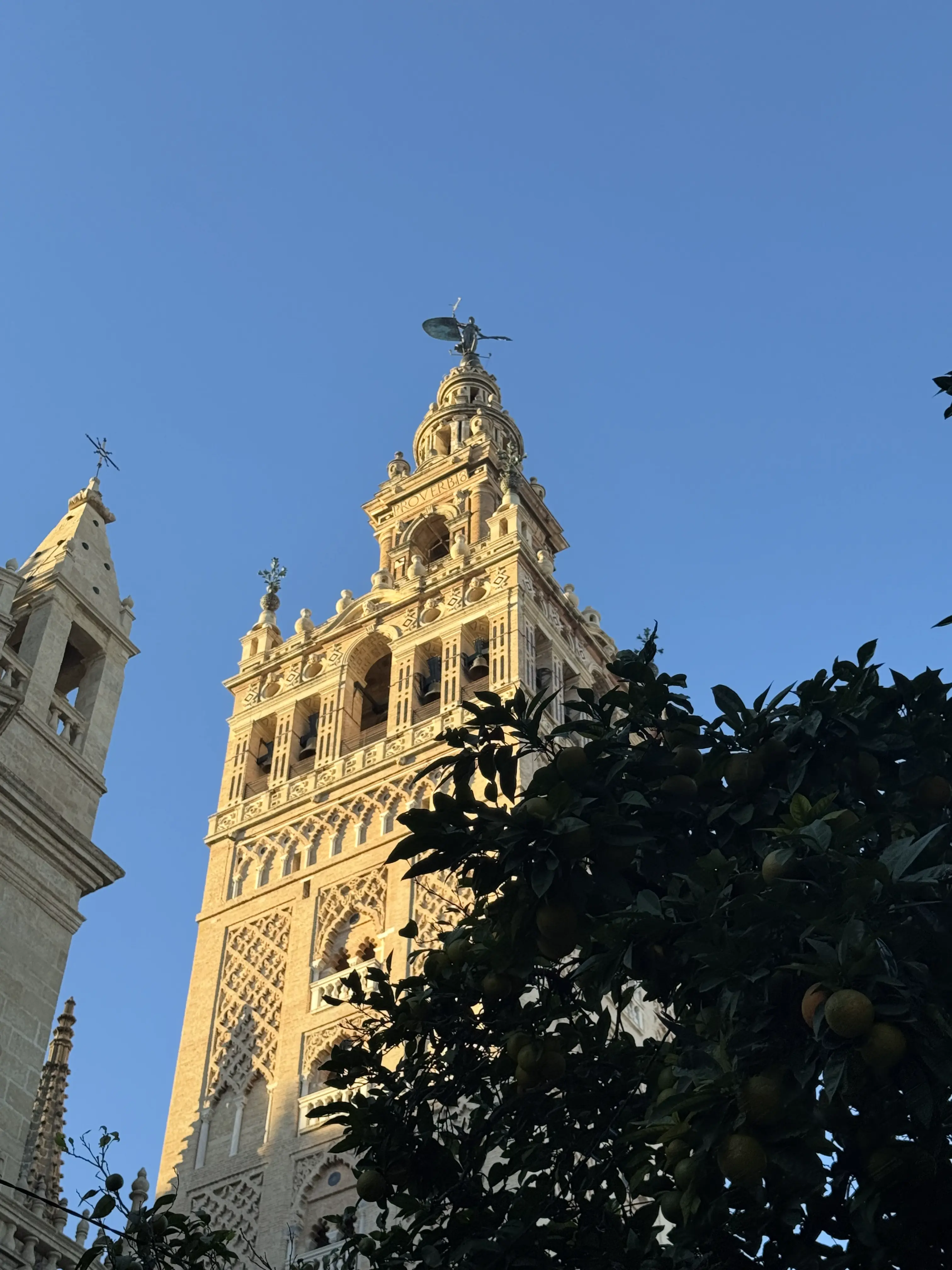
Seville Cathedral & La Giralda | World’s largest Gothic cathedral. Climb La Giralda tower for city views. Columbus’s tomb inside. €12. |
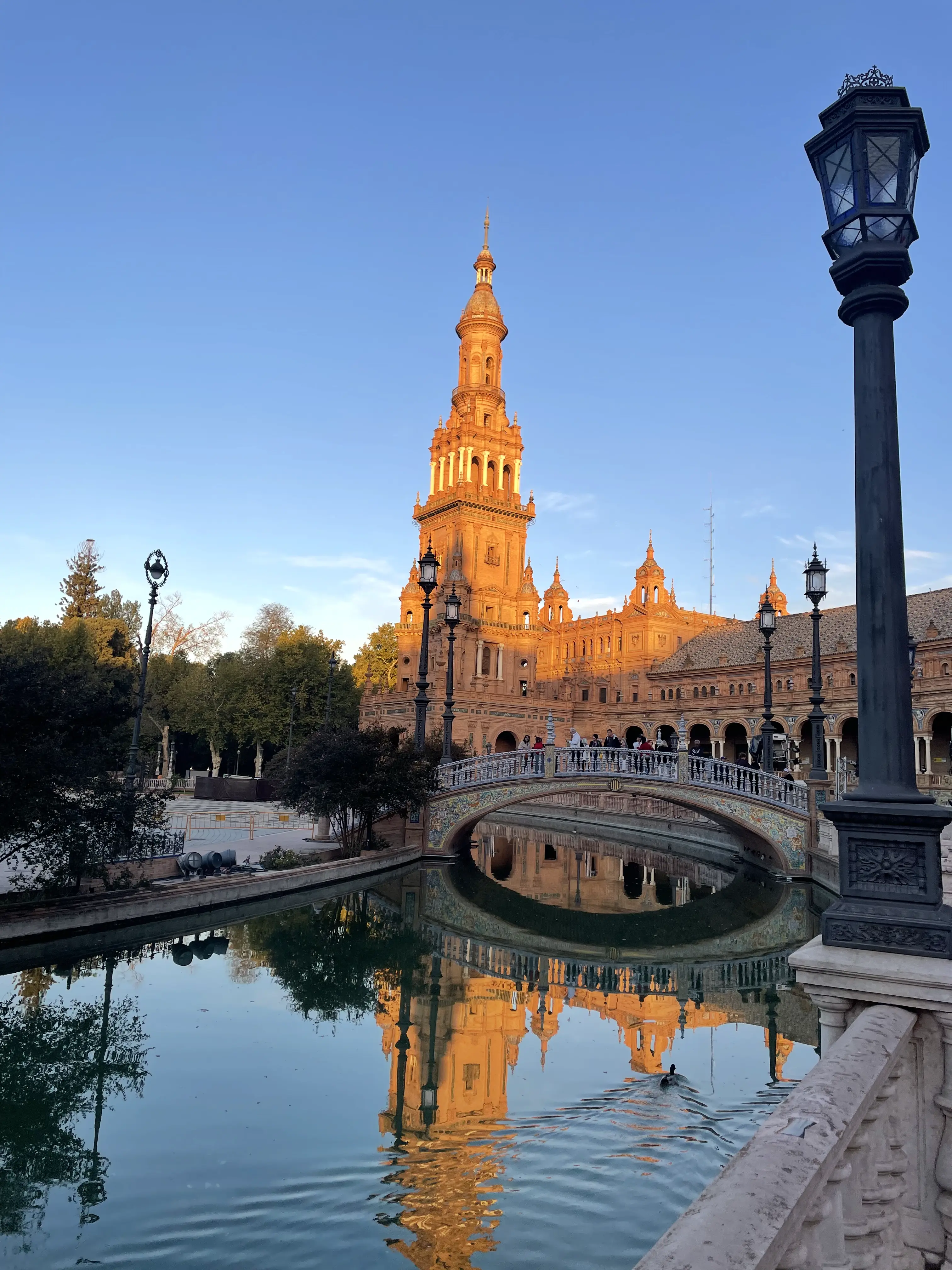
Plaza de España | Breathtaking 1929 Expo pavilion. Tiled alcoves for each Spanish province. Free. Best at golden hour. |
Barrio de Santa Cruz | The old Jewish quarter. Narrow lanes, orange trees, hidden plazas. Free to wander. |
Metropol Parasol (Las Setas) | World’s largest wooden structure. Rooftop walkway with panoramic views. €5. |
Torre del Oro | 13th-century watchtower on the Guadalquivir. Naval museum. €3. |
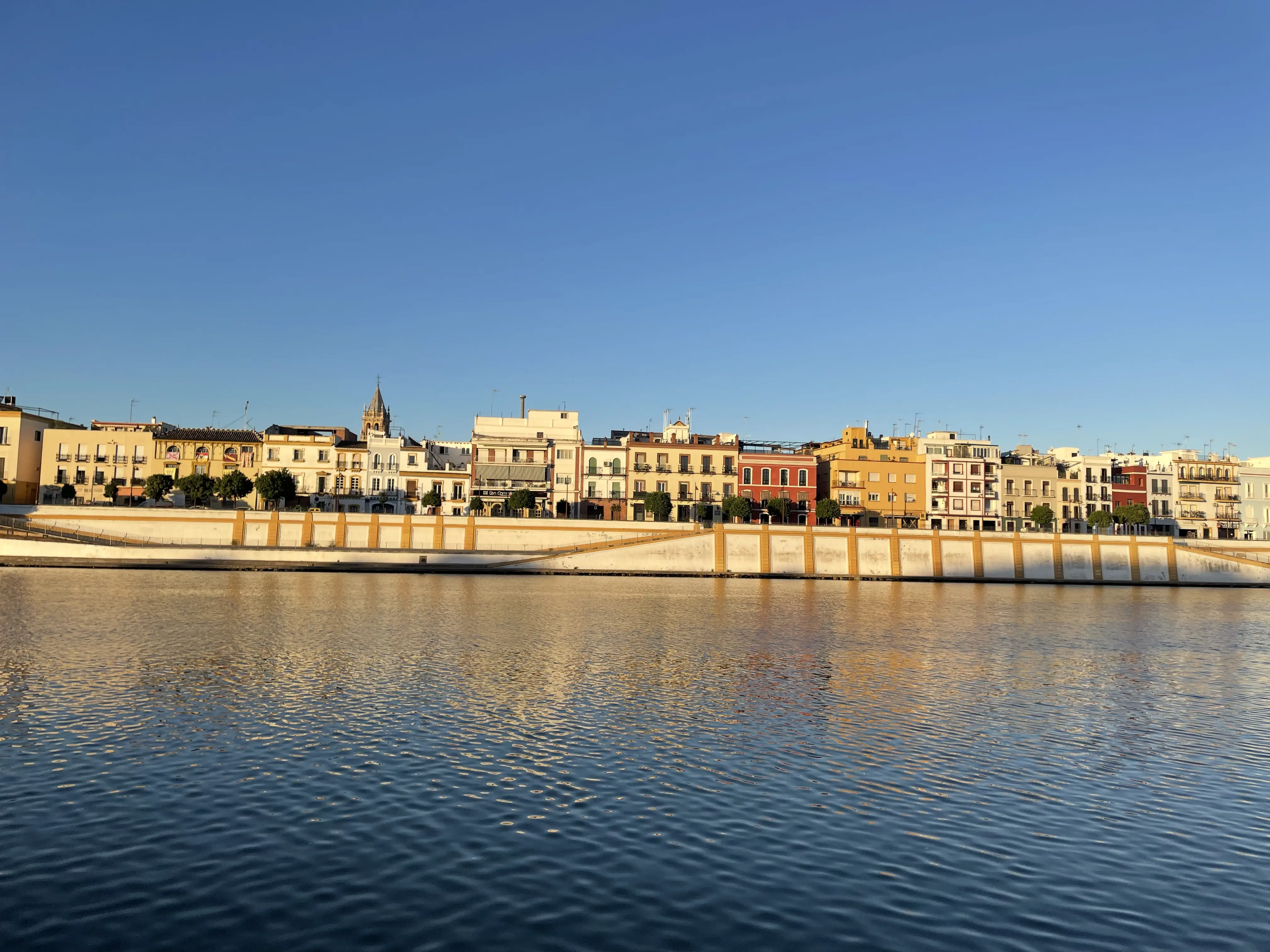
Triana | Historic neighborhood across the river. Ceramics, flamenco, Triana Market. Free to explore. |
María Luisa Park | Beautiful public park. Horse-drawn carriages, shaded paths, Plaza de América. |
Guadalquivir River Cruise | Evening boat cruise for city views. €15–25. |
Day Trips
Córdoba (45 minutes by AVE train) offers the mesmerizing Mezquita-Cathedral and a charming old town. Jerez de la Frontera (1 hour south) is the sherry capital and home to the Royal Andalusian School of Equestrian Art — their horse shows are spectacular. Cádiz (1.5 hours) is a beautiful coastal city with some of the best seafood in Spain. The Pueblos Blancos (White Villages) of the Andalusian hills are perfect for a scenic drive. The entire stretch of coast from the kitesurfing village of Tarifa (a Gata favorite) up to Cádiz is gorgeous, with recommended stops in Caños de Meca, Barbate, and Zahara de los Atunes.
Practical Information
Getting There
Seville Airport (SVQ) has connections to major European cities but very few direct long-haul flights. Most travelers from the U.S. connect through Madrid, Málaga, Barcelona, London, or Lisbon. The high-speed AVE train from Madrid takes just 2 hours 20 minutes and is an excellent, comfortable option. From the airport, the EA bus runs to the city center in ~35 minutes (€4). Taxis cost approximately €25–30.
Getting Around
Seville’s historic center is compact and very walkable — most major attractions are within 15–20 minutes of each other on foot. The city has a Metro (one line), tram, and an extensive bike-sharing system (Sevici), plus it’s super flat and easy to bike/walk. Taxis are affordable. For La Cartuja (Betis matches), shuttle buses run on matchdays.
Best Time to Visit
Sep–Nov | Ideal. Still warm (75–85°F). La Liga underway. Fewer tourists. Great atmosphere. |
Mar–May | Spring soccer. Semana Santa (Holy Week) and Feria de Abril are spectacular and a once-in-a-lifetime experience, we highly recommend if you can manage, but prices will be high for hotels. |
Jun–Aug | Extremely hot (100–110°F). La Liga ends in May. Many locals leave the city. Know it will be stiflingly hot if you go at this time. |
Dec–Feb | Mild and pleasant (50–65°F). Quieter city. Good value. Soccer season in full swing. |
Language
Spanish (Castellano) with a strong Andalusian accent — locals speak quickly and drop consonants, so even intermediate Spanish speakers may find it challenging at first. English is spoken in hotels and major tourist spots but less so in neighborhood tapas bars. A few friendly phrases in Spanish will go a long way here.
Currency & Tipping
Euro (€). Cards widely accepted. Same tipping norms as the rest of Spain. Seville is notably affordable: tapas portions are generous, drinks are cheap, and many bars still give a free tapa with your beer.
Safety
Seville is generally safe. Keep valuables secure and be alert in crowds. Stadium areas on matchday are safe but busy — arrive early and follow crowd management directions.
Emergency | 112 |
Airport | SVQ (10 km from center) |
AVE Train | Madrid 2h20; Córdoba 45 min |
Time Zone | CET (UTC+1) / CEST (UTC+2) in summer |
Electrical | Type C/F plugs, 230V (U.S. visitors need adapter) |
Where to Stay
Santa Cruz / Cathedral Area — Best for Sightseeing
The historic heart of Seville. Walking distance to the Alcázar, Cathedral, and the best tapas bars. The Hotel Alfonso XIII (Marriott Luxury Collection) is Seville’s most iconic hotel, though pricey. EME Catedral Hotel has a rooftop pool overlooking the Giralda. Boutique options abound in converted historic houses with plenty of character.
Triana — Best for Food, Flamenco & Authenticity
Across the river from the old city. The most “local” neighborhood for visitors. Excellent tapas bars, flamenco venues, and a riverside promenade. Hotels are fewer but atmospheric. Great for travelers who want to live like a Sevillano.
Nervión — Best for Sevilla FC Matchday
The neighborhood around the Sánchez-Pizjuán. More residential, less touristy, but walking distance to the stadium and well-connected to the center. Good mid-range hotel options and match-day bar atmosphere. The Only You is nearby and the Novotel right next to the stadium.
Alameda de Hércules — Best for Nightlife & Design Hotels
Seville’s trendiest area. A long, tree-lined plaza surrounded by bars, restaurants, and boutique hotels. Great for younger travelers or those wanting a more contemporary vibe. Hotel Sacristia de Santa Ana is a lovely option.
Approximate Hotel Pricing
Budget / 3-Star | €50–90 per night |
Mid-Range / 4-Star | €90–200 per night |
Luxury / 5-Star | €200–500+ per night |
Boutique / Design | €100–250 per night |
Pricing Warning
Hotel prices in Seville skyrocket during Semana Santa (Holy Week, March/April) and Feria de Abril (two weeks after Easter). Rates can triple and availability evaporates months in advance. These are incredible events, but plan and book extremely early if visiting during these periods.
Sample 4-Day Seville Itinerary
Day 1 — Arrival & the Old City
Arrive and check in. Walk the Barrio de Santa Cruz: narrow lanes, orange trees, hidden plazas. Afternoon: Real Alcázar (book timed entry in advance). Evening: tapas crawl starting in Santa Cruz, then cross to Triana for a second round. End with a fino sherry at a riverside terrace.
Day 2 — Soccer Day
Morning: Seville Cathedral and La Giralda (climb the tower for views). Walk to Plaza de España. Afternoon: stadium tour at the Sánchez-Pizjuán (if available) or explore the Nervión neighborhood pre-match bars. Evening: attend a Sevilla FC or Real Betis La Liga match (check fixture calendar — Seville almost always has a home game on any given weekend). Post-match: celebrate with fans in the local bars.
Day 3 — Flamenco & Culture
Morning: Metropol Parasol (Las Setas) for rooftop views and the Antiquarium below. Explore the Alameda de Hércules. Lunch: tapas in the Feria / Macarena neighborhood for a more local experience. Afternoon: wander Triana — the ceramic workshops, Triana Market, and riverside bars. Evening: flamenco show at Casa de la Memoria or Tablao El Arenal. This is the highlight of the cultural trip.
Day 4 — Flexible & Departure
Morning: María Luisa Park stroll, or revisit a favorite tapas spot for brunch. Options for those staying longer: day trip to Córdoba (45 min by AVE) or Jerez (horse show + sherry bodega tour). If a second match falls in your window — Seville has two La Liga clubs, so the chances of catching a match on any weekend are excellent.
Double-Header Tip
Because Seville has two La Liga clubs, there’s almost always a home match in the city on any given weekend. With a little planning, you can potentially see both Sevilla FC and Betis on consecutive days. Build a “Friday-to-Tuesday” schedule for maximum flexibility around fixture confirmation.
Quick Reference Card
Airport | Seville (SVQ), 10 km from center |
AVE Train | Madrid 2h20; Córdoba 45 min; Málaga 2h |
Sevilla FC Tickets | sevillafc.es |
Real Betis Tickets | realbetisbalompie.es |
Sevilla FC Stadium Tour | sevillafc.es (Ramón Sánchez-Pizjuán) |
Real Alcázar | alcazarsevilla.org (book timed entry) |
Seville Cathedral | catedraldesevilla.es |
Flamenco (Casa de la Memoria) | casadelamemoria.es |
Tourism Board | visitasevilla.es |
Emergency | 112 |
Time Zone | CET (UTC+1) / CEST (UTC+2) in summer |
Electrical | Type C/F plugs, 230V (U.S. visitors need adapter) |
¡Vamos! Enjoy Seville.