THE CITY
The Basque Country (Euskadi in the Basque language, País Vasco in Spanish) is unlike anywhere else in Spain — or, for that matter, anywhere else in the world. Straddling the border between northern Spain and southwestern France, this autonomous region has its own ancient language (Euskara), its own fiercely proud cultural identity, and a sporting tradition that is deeply woven into everyday life. For sports fans, it offers something no other destination can: clubs and athletes that are inseparable from the identity of the people who support them.
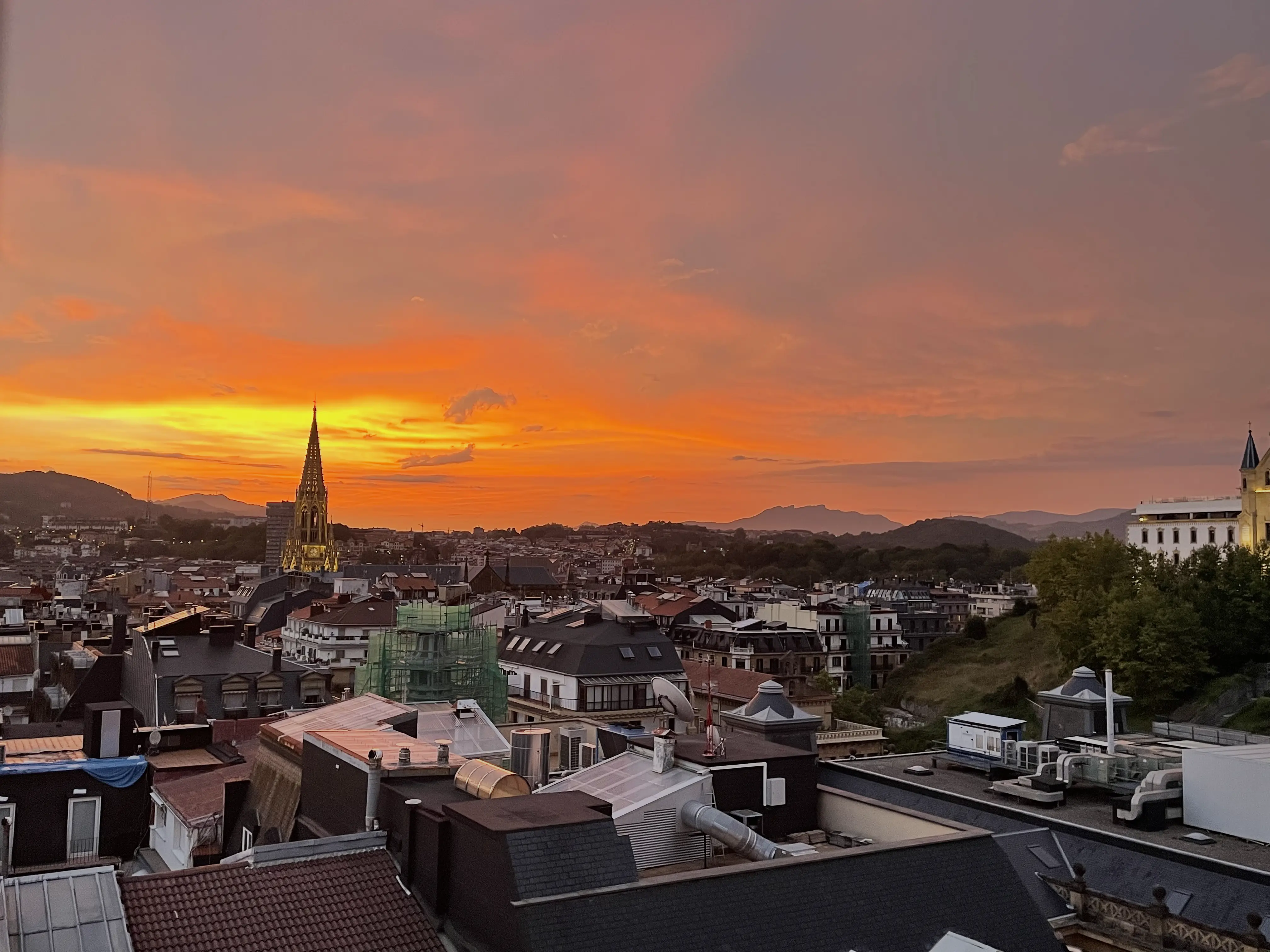
Bilbao and San Sebastián (Donostia in Basque), the region’s two largest cities, sit just an hour apart on Spain’s dramatic northern coast. Together they offer a compact, deeply rewarding sports travel experience: two historic La Liga clubs with passionate followings, three Liga F women’s teams, world-class food that rivals any city on earth, gorgeous beaches, striking architecture, and a cultural authenticity that feels worlds away from the tourist circuits of Barcelona and Madrid.
All about
Bilbao & San Sebastián
Athletic Club (Bilbao): A Club Like No Other
Athletic Club — known globally as Athletic Bilbao — is one of the most unique institutions in world sports. Founded in 1898, the club adheres to an unwritten but fiercely upheld policy: only players who were born in the Basque Country or who learned their soccer skills at a Basque club’s academy may play for Athletic. This “cantera policy” has been in place since 1912 and applies to the men’s team, women’s team, and all youth teams. It is not written into the club’s bylaws, but no president has ever campaigned on changing it, and the fan base overwhelmingly supports it.
The result is extraordinary: Athletic is one of only three clubs (alongside Real Madrid and FC Barcelona) never to have been relegated from La Liga’s top division — despite drawing from a talent pool of roughly 3 million people in the greater Basque region. They have won 8 La Liga titles and 24 Copa del Rey trophies, making them the fourth-most decorated club in Spanish soccer history. The policy means that watching Athletic is watching something philosophically different from almost any other top-level club: a community fielding its own. Its captain, Iñaki Williams, and younger brother Nico both star for Athletic, but they play for different selections – Iñaki playing for his parents’ native Ghana and Nico having been a star in Spain’s 2024 Euro championship.
Why This Matters
The Basque-only policy is one of the great stories in world sports. It resonates powerfully with American fans who value underdog narratives, community identity, and the idea that sports can mean something beyond money. Think of Athletic Club as the sporting equivalent of a farm-to-table restaurant: everything is local, everything is authentic, and the result is genuinely special.
San Mamés Stadium
Athletic’s home is the San Mamés Stadium (nicknamed “The Cathedral”), a stunning 53,000-seat arena that opened in 2013, replacing the original San Mamés that had stood since 1913. The stadium is named after Saint Mammes (or Mamés), an early Christian martyr said to have been thrown to the lions by the Romans — hence Athletic’s nickname, “Los Leones” (The Lions). The modern San Mamés is widely considered one of the finest stadiums in Europe, with excellent sightlines, a dramatic cantilevered roof, and an atmosphere that is deafening on matchday.
Capacity | 53,289 |
La Liga Tickets | €50–100, with VIP seats starting around €200 (dynamic pricing; Basque derbies and top opponents significantly higher) |
Copa del Rey | €50–200+ depending on round and opponent |
Stadium Tour | Available on non-matchdays; check athletic-club.eus |
Getting There | Metro: San Mamés (Lines 1 & 2); tram: San Mamés |
Athletic Club Femení
Athletic Club’s women’s team competes in Liga F, Spain’s top women’s division, and adheres to the same Basque-only policy as the men’s side. They are historically one of the strongest women’s teams in Spain. Athletic Femenino also is a storied club in the shorter history of the women’s league – it has won five titles this century. Home matches are typically played at the Lezama training complex or occasionally at San Mamés for high-profile fixtures. Tickets are very affordable and the quality of play is excellent.
Real Sociedad (San Sebastián)
Real Sociedad — known as “La Real” — is Athletic’s great Basque rival, based in the beautiful coastal city of San Sebastián. Founded in 1909, Sociedad won back-to-back La Liga titles in 1981 and 1982 and the Copa del Rey in 1987 and again in 2020. Unlike Athletic, Real Sociedad abandoned its own Basque-only policy in the late 1980s and now signs international players, though the club retains a deep Basque identity and its academy at Zubieta continues to produce top talent.
Real Sociedad currently plays at the Reale Arena (formerly Anoeta Stadium), a modern 39,500-seat venue that underwent a significant renovation completed in 2019, enclosing the stadium and dramatically improving the atmosphere. The Basque derby between Real Sociedad and Athletic Club is one of the most intense and culturally significant fixtures in European soccer.
An American at the Helm: Pellegrino Matarazzo
In December 2025, Real Sociedad made history by appointing Pellegrino Matarazzo as head coach — the first American ever to manage a La Liga club. Born in Wayne, New Jersey, to Italian immigrant parents, Matarazzo played college soccer at Columbia University before building his coaching career in Germany, where he managed VfB Stuttgart and TSG Hoffenheim in the Bundesliga. He was a protégé of current Germany national team coach Julian Nagelsmann.
Matarazzo took charge with Sociedad near the relegation zone and has engineered a remarkable turnaround: a nine-match unbeaten run, a rise to as high as 6th in La Liga, and — most dramatically — a place in the 2026 Copa del Rey Final, making him the first American to coach a top-five European league team in a major cup final. For American fans, the chance to watch a fellow American coaching at this level, in one of Europe’s most atmospheric stadiums, is a unique selling point.
Stadium | Reale Arena (39,500 capacity) |
La Liga Tickets | €60–200+ (dynamic pricing applies) |
Basque Derby | €150–400+ (extremely high demand) |
Getting There | Bus routes 5, 28; walking distance from city center |
Coach | Pellegrino Matarazzo (USA) — first American La Liga manager |
Real Sociedad Femení
Real Sociedad’s women’s team also competes in Liga F and plays home matches at the Zubieta training facility. They have been a consistent presence in Spain’s top women’s division and offer an excellent, affordable matchday experience in a more intimate setting.
SD Eibar — Liga F
Completing the trio of Basque women’s teams in Liga F is SD Eibar Femení, based in the small industrial town of Eibar (population ~27,000) in Gipuzkoa province. Eibar’s women’s team has roots dating back to 1991 and competes at the Ipurua Municipal Stadium. For travelers interested in experiencing the full spectrum of Basque women’s soccer, an Eibar match offers an incredibly intimate, local experience — the kind of grassroots atmosphere that is increasingly rare in professional sport. Eibar is approximately 50 minutes from both Bilbao and San Sebastián by car or train.
The Basque Derby: Athletic vs. Real Sociedad
If there is one fixture that captures the soul of Basque sports culture, it’s the derby between Athletic Club and Real Sociedad. This is not a rivalry born of hatred — it’s a rivalry born of proximity, pride, and shared identity. Fans of both clubs consider themselves Basque first, and the derby is as much a celebration of that identity as it is a competition. The atmosphere is intense but respectful, and the fixture is one of the most coveted tickets in Spanish soccer.
The derby takes place twice per season in La Liga (home and away), with additional meetings possible in the Copa del Rey. In the 2025–26 season, the two sides met in the Copa del Rey semifinal — won by Matarazzo’s Sociedad 2–0 on aggregate. If you can manage to time a visit around a Basque derby, it will be the sporting highlight of your trip.
Ticket Advisory
Basque derby tickets are extremely difficult to obtain and prices on the secondary market are high (€150–400+). For other La Liga fixtures at both stadiums, availability is much better than at Barcelona or Madrid, and the matchday experience is arguably more authentic. Book through official club channels first.
Eating & Drinking: The World’s Greatest Food Region
This is not an exaggeration: the Basque Country has a legitimate claim to being the greatest food region on earth. San Sebastián alone has the highest concentration of Michelin stars per capita of any city in the world — approximately 19 stars across a dozen restaurants in a city of just 186,000 people, including three restaurants holding the coveted three-star rating. Bilbao’s food scene, while less internationally famous, is exceptional in its own right. And the everyday food — the pintxos bars, the grilled fish, the cider houses — is just as extraordinary as the fine dining.
Pintxos: The Basque Art Form
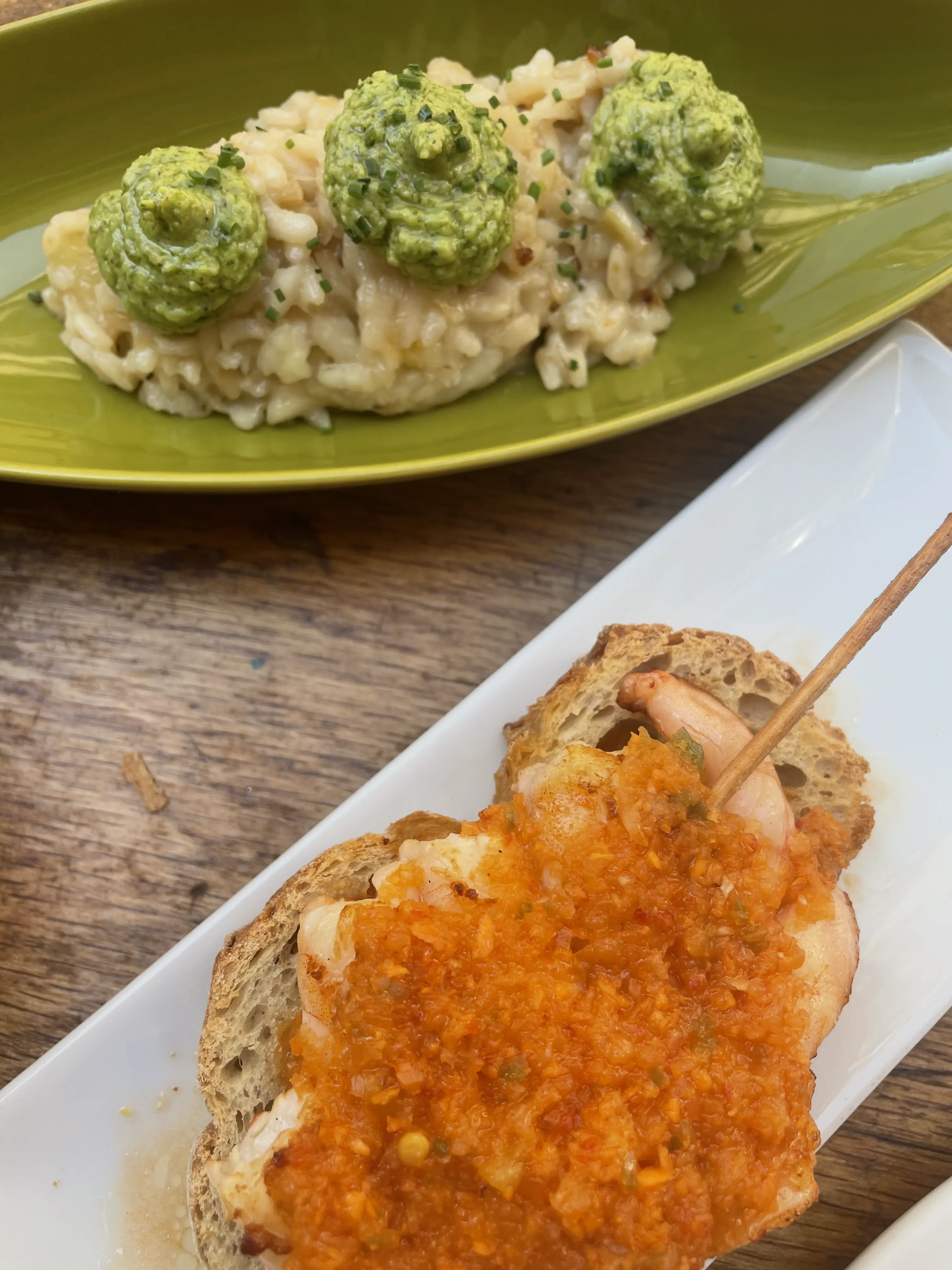
Pintxos (pronounced “peen-chos”) are the Basque Country’s answer to tapas, but elevated to an art form. These are individually crafted bite-sized creations, often served on bread or skewers, displayed on bar counters in dazzling arrays. The tradition of “going for pintxos” — hopping from bar to bar with a small beer (zurito) or glass of wine, especially txakolí (local crisp white wine) — is the defining social ritual of Basque life. In San Sebastián’s Parte Vieja (Old Town), you can barely walk 20 feet without encountering another pintxos bar.
San Sebastián Pintxos Highlights
Ganbara | Old Town. Famous for wild mushroom and foie gras pintxos. A must-visit first stop. |
La Cuchara de San Telmo | Old Town. Hot pintxos made to order. The veal cheeks are legendary. |
Borda Berri | Old Town. Modern Basque flavors. Try the kokotxas (cod cheeks) in pil-pil sauce. |
Bar Nestor | Old Town. Famous for two things: the tortilla (served at 1pm and 8pm only) and the txuleta steak. |
A Fuego Negro | Old Town. Playful, avant-garde pintxos with a creative edge. |
Bilbao Pintxos Highlights
Plaza Nueva | The arcaded square in the Casco Viejo is ground zero for Bilbao pintxos. Multiple excellent bars. |
Café Iruña | Gorgeous Moorish-style interior, great pintxos, and a Bilbao institution since 1903. |
Gure Toki | Plaza Nueva. Award-winning pintxos with creative flair. |
El Globo | Multiple locations. Classic Bilbao pintxos bar; try the croquetas. |
Victor Montes | Plaza Nueva. Upscale pintxos and an impressive wine list. |
Fine Dining
For travelers who want a bucket-list dining experience, the Basque Country delivers at the highest level. In San Sebastián: Arzak (three Michelin stars, a pioneer of New Basque Cuisine), Akelarre (three stars, perched on a cliff above the sea), and Martín Berasategui (three stars, in the hills above the city) are among the world’s most celebrated restaurants. Book 2–4 months in advance for three-star venues. Rekondo has one of the most expansive wine lists in Spain to accompany great food. In the Bilbao area, Azurmendi (three stars, in the hills of Larrabetzu) offers an immersive experience that begins with a greenhouse picnic and unfolds through a stunning tasting menu.
Beyond the stars, restaurants like Elkano in Getaria (one star, famous for whole grilled turbot) and Asador Etxebarri in Atxondo (one star, widely considered the world’s greatest grill restaurant) are destination-worthy experiences that combine Basque simplicity with breathtaking technique.
Cider Houses (Sagardotegiak)
From January through April, the Basque cider houses open for their annual season. The tradition of “txotx” (pronounced “chotch”) involves standing at giant barrels, catching streams of natural cider in your glass, and eating a set menu of cod omelet, grilled cod, txuleta steak, cheese, and walnuts. It’s raucous, communal, and deeply Basque. The cider house town of Astigarraga, just outside San Sebastián, is the epicenter. This is an unmissable experience for people traveling between January and April.
Txakolí
Txakolí (pronounced “cha-co-LEE”) is the Basque Country’s local white wine: light, slightly sparkling, bone-dry, and traditionally poured from a height to aerate it. It’s the perfect accompaniment to pintxos and seafood. The vineyards around Getaria and Zarautz, between Bilbao and San Sebastián, offer tastings and tours with dramatic coastal views.
Beaches & Sightseeing
Beaches
The Basque coast is stunning. Unlike the Mediterranean, the Bay of Biscay offers dramatic cliffs, powerful surf, and wide sandy beaches with a wild, Atlantic character.
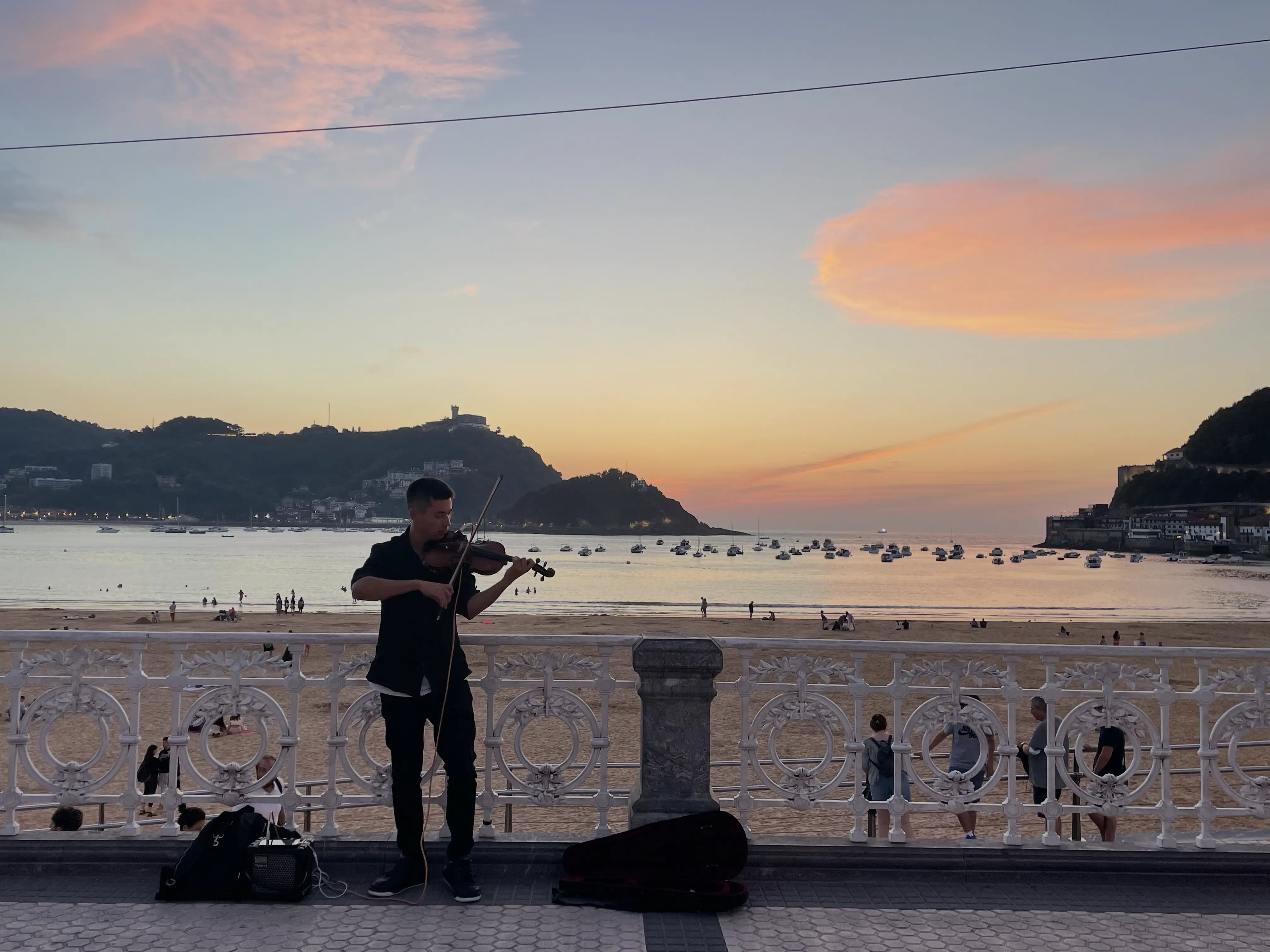
La Concha (San Sebastián) | Consistently ranked among Europe’s most beautiful urban beaches. A perfect crescent of golden sand framed by Monte Urgull and Monte Igueldo. |
Zurriola (San Sebastián) | The city’s surf beach, in the hip Gros neighborhood. Popular with surfers and a younger crowd. |
Playa de la Arena (Bilbao area) | A wide, sandy beach about 30 minutes from central Bilbao. Less touristy, very local. |
Mundaka | World-famous left-hand river-mouth break, 35 km from Bilbao. Even non-surfers will enjoy the dramatic setting. |
Zarautz | Between the two cities. Long sandy beach, great surf, and excellent beachfront pintxos bars. |
Bilbao Sightseeing
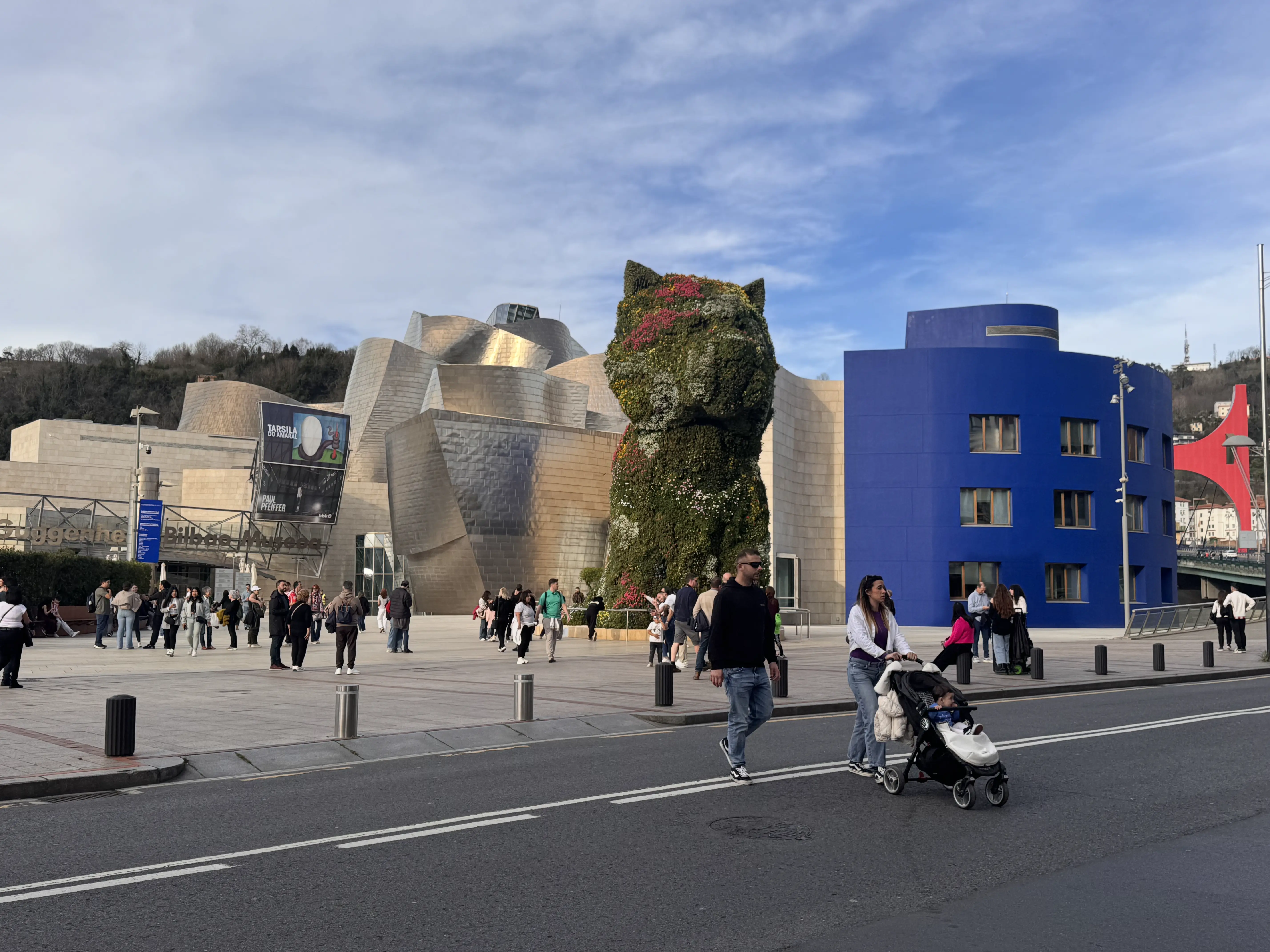
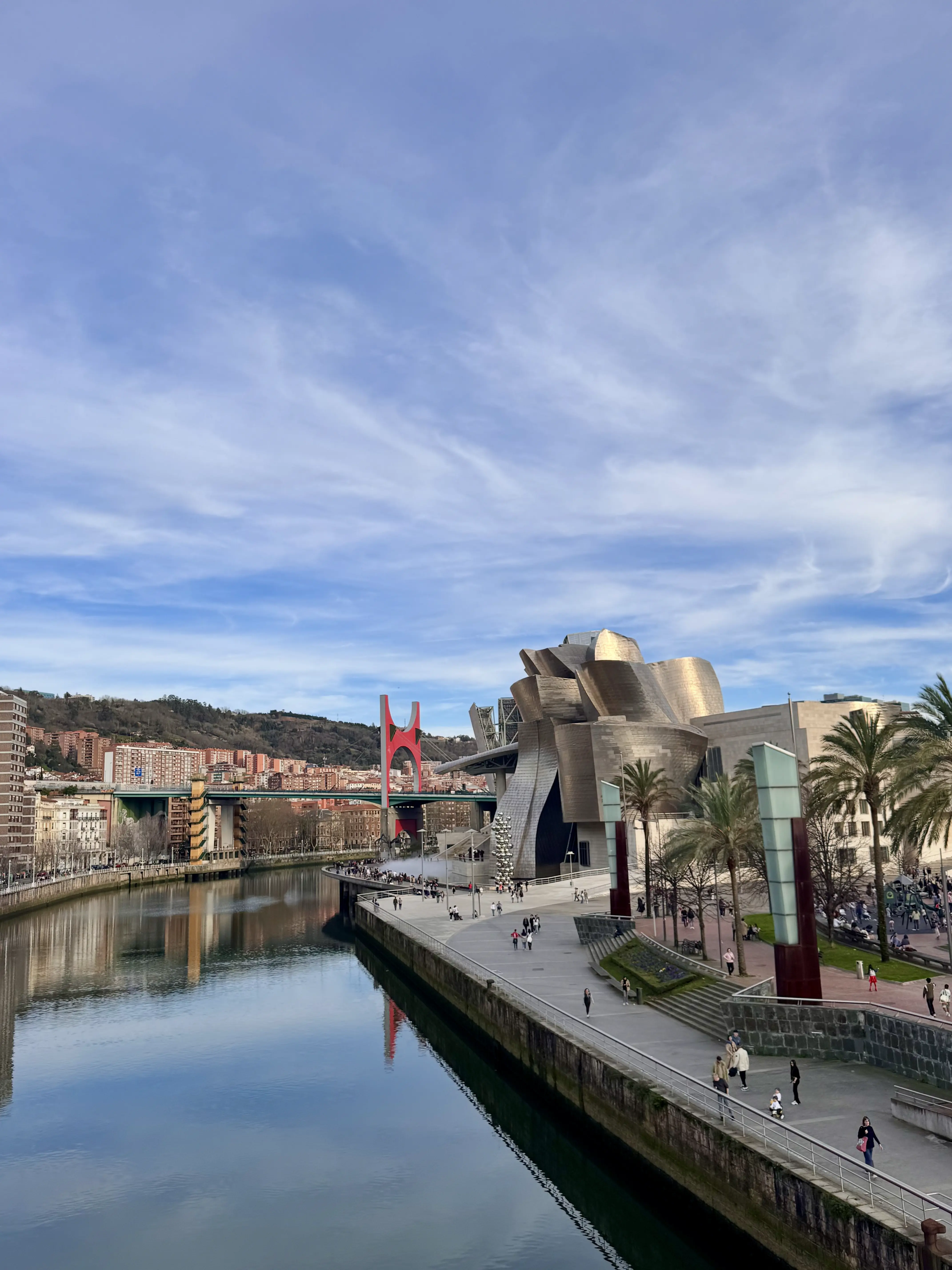
Guggenheim Museum | Frank Gehry’s titanium masterpiece. The building alone is worth the trip. World-class modern art. €16. |
Casco Viejo (Old Town) | The Seven Streets. Medieval heart of the city. Pintxos bars, shops, cathedral. |
Puente Colgante | UNESCO-listed transporter bridge from 1893. A unique engineering landmark. |
Azkuna Zentroa | A former wine warehouse redesigned by Philippe Starck. Cultural center, cinema, rooftop pool. |
Museo de Bellas Artes | One of Spain’s best fine art museums. €10. |
San Sebastián Sightseeing
Monte Igueldo | Funicular to the top for panoramic views of La Concha bay. Charming vintage amusement park. |
Monte Urgull | Walk up to the fortress and the Christ statue for sweeping city and sea views. Free. |
Parte Vieja (Old Town) | The pintxos and culture heart of the city. Pl. de la Constitución, churches, narrow streets. |
San Telmo Museoa | Museum of Basque culture and history, set in a 16th-century convent. €8. |
La Bretxa Market | Fresh fish, Iberíco ham, local cheese, produce. The culinary pulse of the city. |
Day Trips & Excursions
The Basque coastline between Bilbao and San Sebastián is spectacular and easily explored by car or local bus. Getaria (a fishing village famous for grilled fish and txakolí), Zarautz (long beach, surf culture), San Juan de Gaztelugatxe (a dramatic island hermitage used as a Game of Thrones filming location), and Guernica (the historic town bombed in the Spanish Civil War, home to the Peace Museum) are all worthwhile stops. For wine lovers, the Rioja Alavesa wine region is about an hour south of Bilbao.
Practical Information
Getting There
Bilbao Airport (BIO) is the main gateway, with connections to major European hubs including London, Paris, Amsterdam, Frankfurt, and multiple Spanish cities. There are no direct flights from the U.S. — you will connect through Madrid, Barcelona, London, or another European hub. From the airport, the Bizkaibus A3247 runs to central Bilbao in about 25 minutes (€3). Taxis cost approximately €25–30 to the city center.
San Sebastián Airport (EAS) is smaller with more limited connections. Most international visitors fly into Bilbao and travel overland. Biarritz Airport (BIQ) in France is also an option, about 50 minutes from San Sebastián.
Getting Between the Two Cities
Bus (ALSA/Pesa) | Frequent service, ~1 hour 15 min. €10–15 each way. Comfortable and reliable. |
Train (Renfe/Euskotren) | Renfe regional train ~1.5 hours (scenic but slow). Euskotren local line similar. |
Car Rental | ~1 hour via the AP-8 motorway. Gives flexibility for coastal stops. |
Private Transfer | ~1 hour. €120–180. Best option for groups. |
Getting Around
Both cities are very walkable. Bilbao has an excellent Metro system (designed by Norman Foster) and a tram line. San Sebastián is compact enough to walk almost everywhere, with local buses covering the wider area. Taxis are plentiful and affordable in both cities.
Best Time to Visit
Sep–Oct | Ideal. Warm but not hot. La Liga underway. Fewer tourists. Txakolí harvest season. |
Apr–Jun | Spring soccer fixtures. Cider house season ending (Apr). Beaches coming alive. |
Jan–Mar | Cider house season (txotx). La Liga and Copa del Rey in full swing. Can be rainy. |
Jul–Aug | Peak summer. Beaches packed. San Sebastián film festival (September). Book well ahead. |
Weather
The Basque Country has an Atlantic climate — green, temperate, and rainier than southern Spain. Summer highs average 75–80°F; winter lows around 40–45°F. Rain is common year-round, especially in spring and fall. Pack layers and a rain jacket regardless of season. The upside: the green landscape is stunning and the cooler climate makes it ideal for active exploration.
Language
The Basque Country is bilingual: Euskara (Basque) and Spanish are both official languages. Signage is in both languages, and many locals speak Basque as a first language. English is spoken in hotels and tourist restaurants but is less widespread than in Barcelona or Madrid. A few Basque phrases are deeply appreciated: “Kaixo” (hello), “Eskerrik asko” (thank you), and “Agur” (goodbye).
Currency & Tipping
Euro (€). Card payments widely accepted. Tipping is the same as elsewhere in Spain: not expected but appreciated. Rounding up or 5–10% at restaurants is standard.
Safety
The Basque Country is extremely safe — significantly safer than Barcelona or Madrid in terms of petty crime. Pickpocketing is rare. Standard urban awareness applies, but this is one of the most relaxed and secure regions in Spain for visitors.
Emergency | 112 |
Bilbao Airport | BIO |
San Sebastián Airport | EAS (limited) or Biarritz BIQ |
Time Zone | CET (UTC+1) / CEST (UTC+2) in summer |
Electrical | Type C/F plugs, 230V (U.S. visitors need adapter) |
Where to Stay
Bilbao
The Casco Viejo (Old Town) is the most atmospheric base, with easy access to pintxos bars and the riverfront. The Ensañche district (the elegant 19th-century expansion) offers upscale hotels near the Guggenheim. Top picks include the Hotel Carlton (historic grande dame on Plaza Moyua), Gran Hotel Domine (design hotel facing the Guggenheim), Meliá Bilbao (contemporary, riverside), and Hotel Ercilla de Bilbao (Marriott Autograph Collection). The NH Collection Villa de Bilbao is centrally located between San Mamés and the Guggenheim. For something more intimate, boutique options are plentiful in the Old Town.
San Sebastián
For walking access to pintxos, beaches, and the stadium, the Centro/Old Town area is unbeatable. The Hotel María Cristina (luxury landmark on the river) and Hotel de Londres y de Inglaterra (Belle Époque beachfront) are the classic choices; and another high-end option outside of town with spectacular views is Akelarre, home to Pedro Subijana’s 3-star Michelin restaurant Akelare. The Gros neighborhood across the river offers a hipper, more local feel with surf-culture vibes. The area around La Concha beach has a range of mid-to-upper-range hotels with stunning sea views, including the new luxury option Nobu San Sebastián.
Approximate Hotel Pricing
Budget / 3-Star | €70–120 per night |
Mid-Range / 4-Star | €120–250 per night |
Luxury / 5-Star | €250–600+ per night |
Boutique / Design | €130–300 per night |
Booking Note
San Sebastián prices spike significantly during the International Film Festival (September), Semana Grande festival (August), and peak summer weekends. Bilbao, which is an industrial capital with a metro population near 1 million, is generally easier to book year-round. For Basque derby weekends, book accommodation in both cities well in advance.
Sample 5-Day Basque Country Itinerary
Day 1 — Arrive Bilbao
Fly into Bilbao. Check in and walk the Casco Viejo. Afternoon: Guggenheim Museum (allow 2–3 hours). Evening: pintxos crawl in Plaza Nueva and the Old Town. Try Gure Toki, Café Iruña, and Victor Montes.
Day 2 — Athletic Club Matchday
Morning: explore the Museo de Bellas Artes and the riverside walk. Afternoon: San Mamés Stadium tour (if non-matchday) or pre-match atmosphere in the surrounding bars. Evening: attend an Athletic Club La Liga match at San Mamés. Post-match: celebrate (or commiserate) with fans in the Casco Viejo bars.
Day 3 — Coast & Transfer to San Sebastián
Morning: drive or bus along the coast. Stop at San Juan de Gaztelugatxe (dramatic island walkway seen in Game of Thrones). Lunch in Getaria — grilled fish at a waterfront asador and a txakolí tasting. Afternoon: continue to San Sebastián. Check in. Walk La Concha beach. Evening: first pintxos crawl in the Parte Vieja — a few of our favorites are La Cuchara de San Telmo, Ganbara, Néstor, Gandarias, Tamboril and Borda Berri, plus La Viña for cheesecake.
Day 4 — San Sebastián: Food & Soccer
Morning: La Bretxa market. Walk or run up Monte Urgull for views. If visiting Jan–Apr: cider house lunch in Astigarraga (book ahead). Otherwise: pintxos lunch in Gros neighborhood. Afternoon: explore the city, swim at La Concha or Zurriola. Evening: attend a Real Sociedad match at Reale Arena (check fixture calendar), or book a Michelin-starred dinner (reserve months in advance for three-star venues such as Akelarre, Martin Berasategui or Arzak; Rekondo has one of the largest wine selections in all of Spain).
Day 5 — Flexible & Departure
Morning: Monte Igueldo funicular for final views. Last pintxos in the Old Town. Options: visit San Telmo Museoa, surf lesson at Zurriola, or an SD Eibar women’s match if the schedule aligns. Afternoon: transfer to Bilbao airport for departure, or extend with a day trip to Rioja Alavesa wine country.
Itinerary Note
This framework works for people who want to visit both cities. For a shorter trip, 3 days focused on one city is also excellent. Time the visit around a Basque derby for the ultimate experience. If visiting in spring, consider adding the Aste Nagusia (Semana Grande) festival in Bilbao (August) or San Sebastián’s Film Festival (September) for a cultural overlay.
Quick Reference Card
Bilbao Airport | BIO (connects via European hubs) |
Athletic Club Tickets | athletic-club.eus |
Real Sociedad Tickets | realsociedad.eus |
SD Eibar (Liga F) | sdeibar.com |
Guggenheim Bilbao | guggenheim-bilbao.eus |
Pintxos Guide (San Seb.) | pintxos.es |
Txakolí Wine Route | txakolinadgetaria.eus |
Transport (Bilbao) | metrobilbao.eus / ctb-bizkaia.eus |
Transport (San Seb.) | dbus.eus |
Emergency | 112 |
Time Zone | CET (UTC+1) / CEST (UTC+2) in summer |
Electrical | Type C/F plugs, 230V (U.S. visitors need adapter) |
Ongi etorri! Welcome to the Basque Country.